A few times last year, I asked why we sometimes found ourselves in a loop of doing things that we honestly know that we don’t want to do or engaging in behaviours that are in conflict with who we want to be or our goals. I really wanted answers but of course that question went unanswered. This was in regards to my self-sabotaging habits which I had finally become aware of (I didn’t understand the concept of self-sabotaging until then). It was important for me to understand more on the subject and how to gradually work my way out of it and so you can imagine my excitement when I came across Brianna Wiest’s book on self sabotaging. It was the first book that I read this year(this was deliberate).This post was meant to be a review/summary only on the book but on further deliberations, it’s going to be a reflection as well.
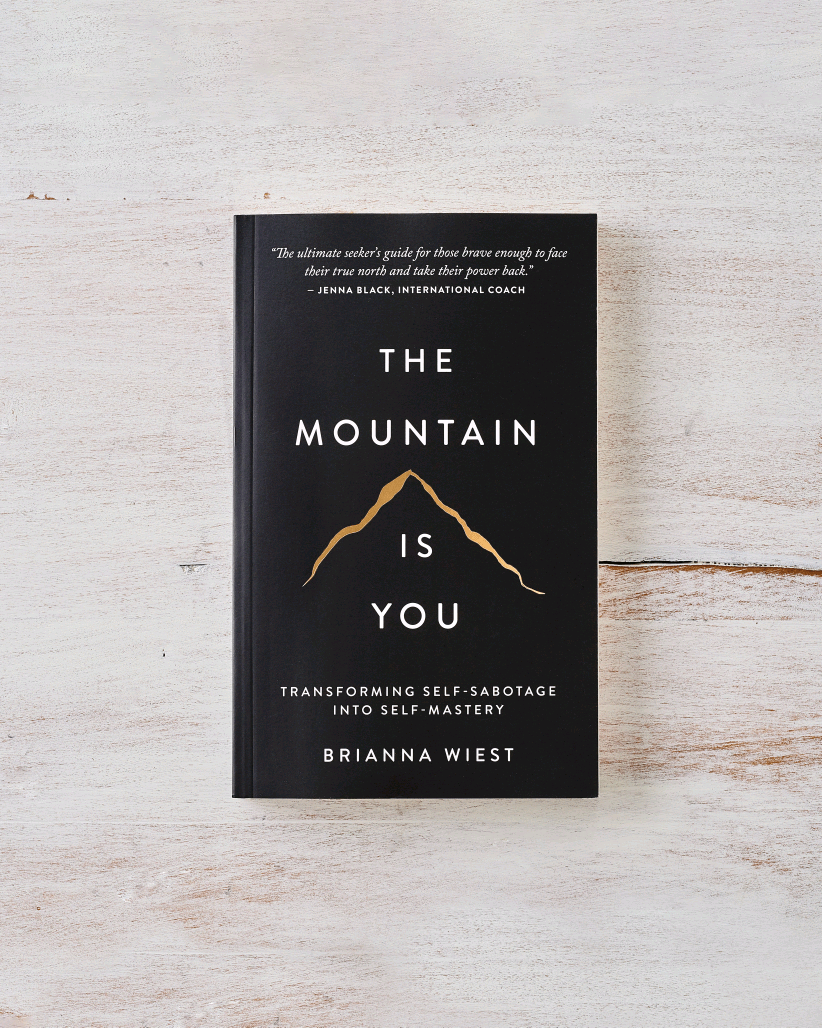
The Mountain Is You: Transforming self-sabotage into self-mastery is a self help book authored by Brianna Wiest and published by Catalog books in 2020
The central theme in this book is on self sabotaging mechanisms we engage in and how to resolve them.
The first few chapters introduces us to what self sabotage is and some of its sources. As emphasized by Brianna, self sabotage is a coping mechanism, a ploy we turn to for temporary relief when we refuse to consciously meet our innermost needs because of lack of believe that we can handle them.
She mentions that where there’s an aging gap between where we want to be and where we are, coupled with resistance, pain and discomfort whenever we make an effort to close it, there’s most likely self sabotage at play.
Basically self-sabotaging is indulging in habits or behaviours that are obstacles to reaching our goals. You can view it as some form of psychological self harm.
It can be a conscious or unconscious thing.
Brianna Wiest, however, argues that self sabotage is not a way we punish ourselves but rather, A WAY BY WHICH WE PROTECT OURSELVES.
What are some sources of self-sabotaging behaviours?
Some sources of self-sabotaging behaviours includes a difficult childhood, irrational fear, belief systems, difficult relationships, low self esteem etc.
This is where behaviours that allowed an individual to adapt or cope with a previous situation are learnt.
What does self sabotage look like?
Resistance: often in the face of something that’s going right such as a new project, bailing on a new great relationship.
This is not to be misconstrued as procrastination.
Unhealthy habits – maintaining habits that are keeping you from meeting your goals.
In this case, we find ourselves repeating behaviours that do us no good.
For instance, knowing a group of company you keep is not good for you and yet, you spend lots of time with said group. This is what is known as ‘cognitive dissonance’ where one holds two conflicting ideas. Another e.g A chronic smoker is aware of it’s long term harmful effects and yet smokes several sticks of cigarettes daily.
Downplaying: because of fear of falling off after peaking or achieving a feat.
This can manifest as constant undermining of efforts or doubts in one’s capabilities or try to make ourselves seem less impressive so that we’re not seen as threats by others.
Guilt of succeeding: this is where imposter syndrome lurks. You’ve achieved a goal or have an accomplishment yet battling with feelings of not deserving it. Everyone in one way or the other has had to deal with imposter syndrome at one point in their life.
Hitting your upper limit: we set a tolerance threshold for having or experiencing positive feelings. What this means is that once things begin to go well for anyone, they get uncomfortable because they’re not used to it.
Chronic worrying: characterized by an individual preoccupying themselves with fears of worst case scenarios or circumstances that have little chances of occuring.
Uprooting: now uprooting is my personal favourite because it resonates with me a lot. In uprooting, one is constantly in need of a fresh start.
I had no clue self sabotaging could take this form. I’ve always felt a need to start things over or to begin a new project whilst bailing on one’s I have already started. What’s happening here is that instead of confronting the issue or finding the root cause, we jump from one thing to the other. This can manifest as jumping from a relationship to another and maybe in my case needing to move from place to place.
1 comment on Book Summary & Reflection on Self-sabotage Pt 1
Book Summary & Reflection on Self-sabotage Pt 1


 Sed
Sed 